Light Optimisation for Restorative Sleep
Understanding how light shapes your internal clock is the single most impactful step you can take toward consistently better nights.
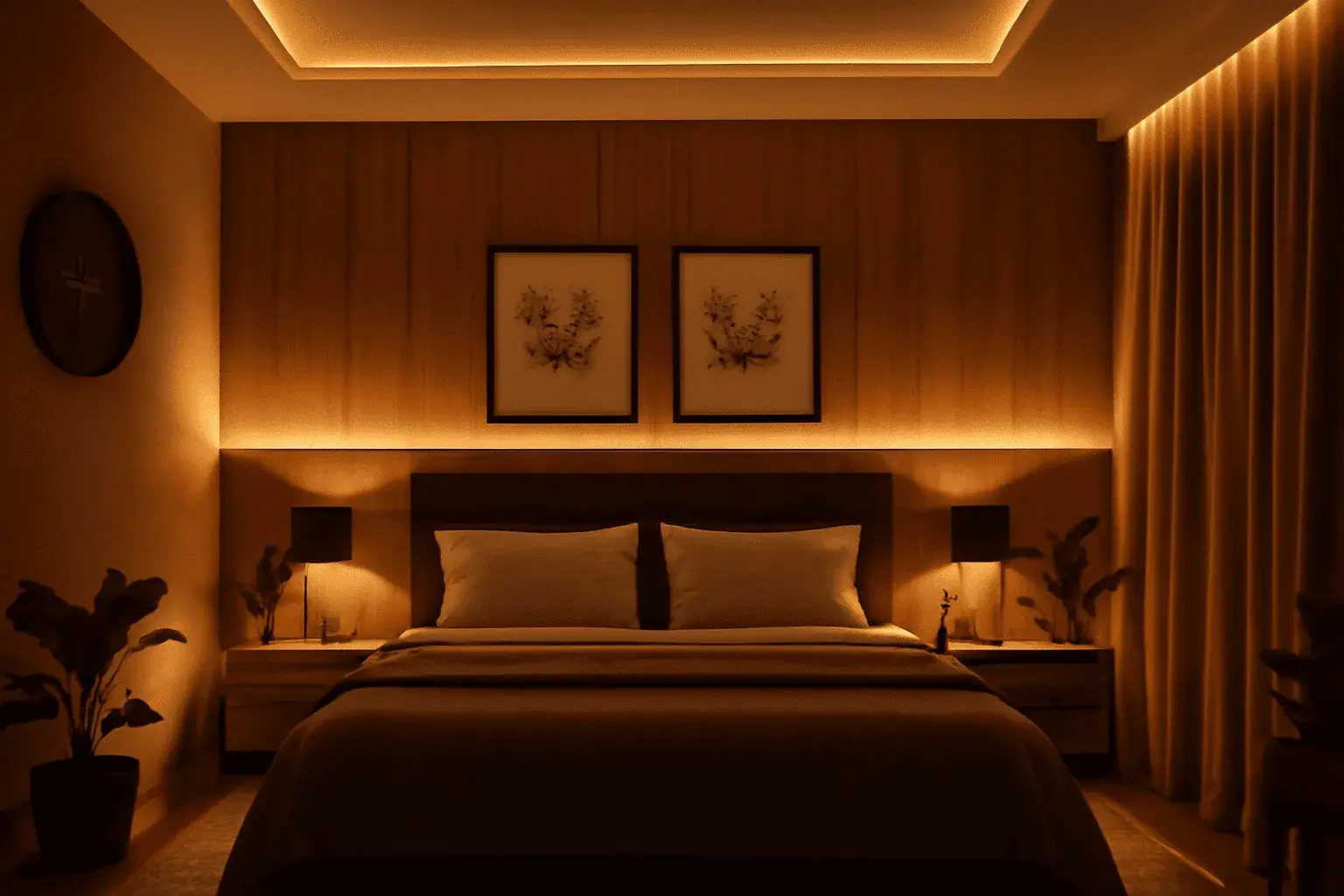
Your Body Runs on Light — Let's Work with That
Light is the primary signal your body uses to synchronise its internal clock with the external world. Exposure to bright, blue-enriched light during the day keeps you alert and supports a healthy circadian rhythm. Conversely, exposure to the same type of light in the evening suppresses melatonin production and delays sleep onset.
Many modern homes and workplaces inadvertently create light environments that conflict with natural sleep cycles. Overhead LED fixtures, screens, and even street lights entering through windows all contribute to this disruption. Our Light Optimisation programme identifies these sources and provides structured solutions.
- Daytime light exposure scheduling for alertness and rhythm stability
- Evening transition protocols using warm-spectrum lighting
- Blackout and window treatment recommendations
- Screen use guidance aligned with your individual sleep window
Key Principles of Sleep-Friendly Light Control
These principles form the foundation of our light optimisation programmes and are supported by extensive chronobiology research.
Morning Bright Light
Exposure to natural or bright artificial light within 30 to 60 minutes of waking anchors your circadian rhythm and improves alertness throughout the day. Even overcast daylight is significantly more beneficial than indoor lighting alone.
Evening Light Reduction
Transitioning to dim, warm-toned lighting at least 90 minutes before your intended sleep time allows melatonin levels to rise naturally. This is one of the most consistent findings in sleep environment research.
Screen Management
Digital screens emit blue-wavelength light that can delay melatonin onset. We provide personalised screen management strategies that account for your specific usage patterns and evening schedule.
Darkness During Sleep
Even small amounts of light during sleep can disrupt the natural architecture of your rest. We assess your bedroom's ambient light levels and recommend practical solutions from blackout linings to door gap covers.
Colour Temperature
Not all artificial light is equal. Warm white bulbs (below 3000K) are substantially less disruptive to sleep preparation than cool white or daylight bulbs. We provide specific product and placement guidance.
Consistent Timing
Keeping your light exposure patterns consistent across weekdays and weekends is as important as the light itself. Irregular patterns — sometimes called social jet lag — can significantly undermine sleep quality.
Light Optimisation — Frequently Asked Questions
Most individuals begin to notice a difference in how quickly they feel sleepy in the evening within one to two weeks of consistently following a light schedule. Full adjustment of the circadian rhythm typically takes three to four weeks of consistent practice.
Not necessarily. Many effective changes can be made using standard warm-white bulbs and simple behavioural adjustments. Where specific tools such as light therapy lamps or smart bulbs would genuinely add value, we provide independent, unbiased recommendations rather than directing you toward any particular product.
Absolutely. Shift workers face unique circadian challenges, and tailored light management is one of the most effective tools available. Our Advanced and Premium programmes include specific protocols designed around irregular working patterns.
Light is the most powerful environmental cue for the circadian system, but sound, temperature, and habitual behaviour all play significant roles. Our programmes address all these factors in combination for the most comprehensive approach.